

Sahil MediaPublished
Practical guidance from Sahil Media’s editorial team—grounded in Libyan market context and platform documentation.
Many teams still start at the end: a hero film, a large production budget, then a post-launch realization that the core message was not sharp enough or the hook did not earn attention in the first seconds.
That is why a short version is not just extra fuel for Reels or Stories. It is an early test that tells you whether the idea deserves a bigger campaign—or needs a fix before more time and money go out the door.
Why this matters for Libyan businesses
In Libya, campaigns often run under time and budget pressure, with small teams wearing marketing, sales, and customer support hats. An unplanned production decision shows up quickly in cost and speed to market.
When you start short, it is easier to test the promise, shooting style, angle, and tone with your audience before a wider production cycle. That matters most for sectors that live on direct response—real estate, restaurants, retail, services, and clinics.
Short assets also give the team something comparable fast. Instead of asking whether we liked the campaign internally, you ask which message earned engagement and which opening drove watch time or inquiries.
The core idea
Before the full film or integrated campaign, build a small test that focuses on one or two variables only—the hook, the offer, the problem angle, or the edit style.
Short form forces clarity fast. If you cannot land the idea in about ten to twenty seconds, you likely have a promise or sequencing problem—not only a length problem.
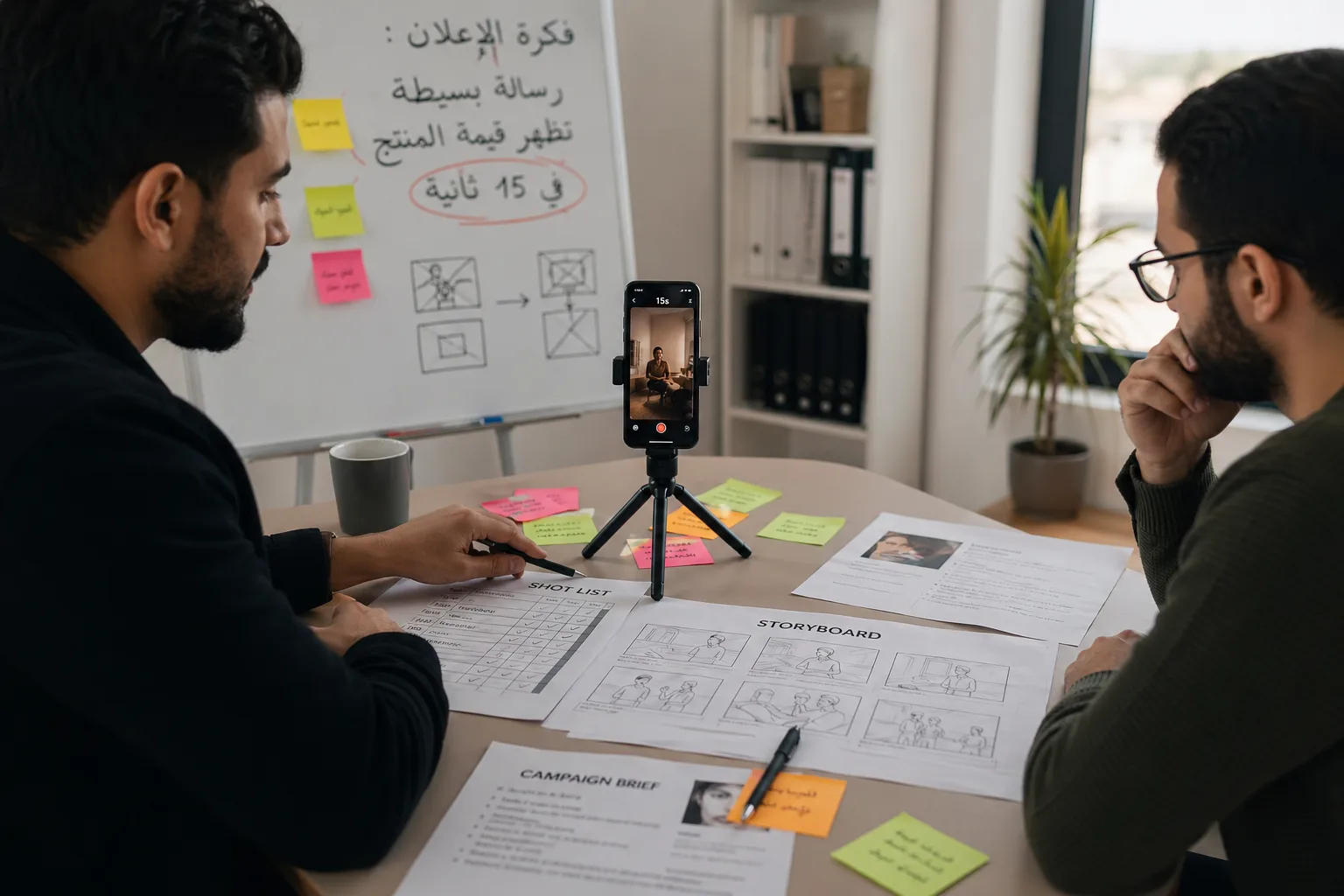
Operationally, short creative helps you learn before you scale. You can try multiple opens, CTAs, or first frames, then keep what proves itself in the real feed—not just in the meeting room.
That lines up with testing discipline from platforms like Google Ads: define a clear hypothesis and change one creative variable at a time so you can read creative impact without confounding targeting or settings changes.
When you move to a bigger production, you are not guessing. You start from a message that already showed early ability to earn attention, engagement, or intent.
Practical steps
- Name the variable you are testing: offer, hook, product presentation, or pacing.
- Write two or three very short scripts—each with a different opening and one clear message.
- Produce light and fast. The goal is message clarity and testability, not polish for its own sake.
- Pick the success metric up front: retention, CTR, WhatsApp leads, or inquiry quality.
- Run the test against an audience close to your core campaign, holding everything else as stable as you can.
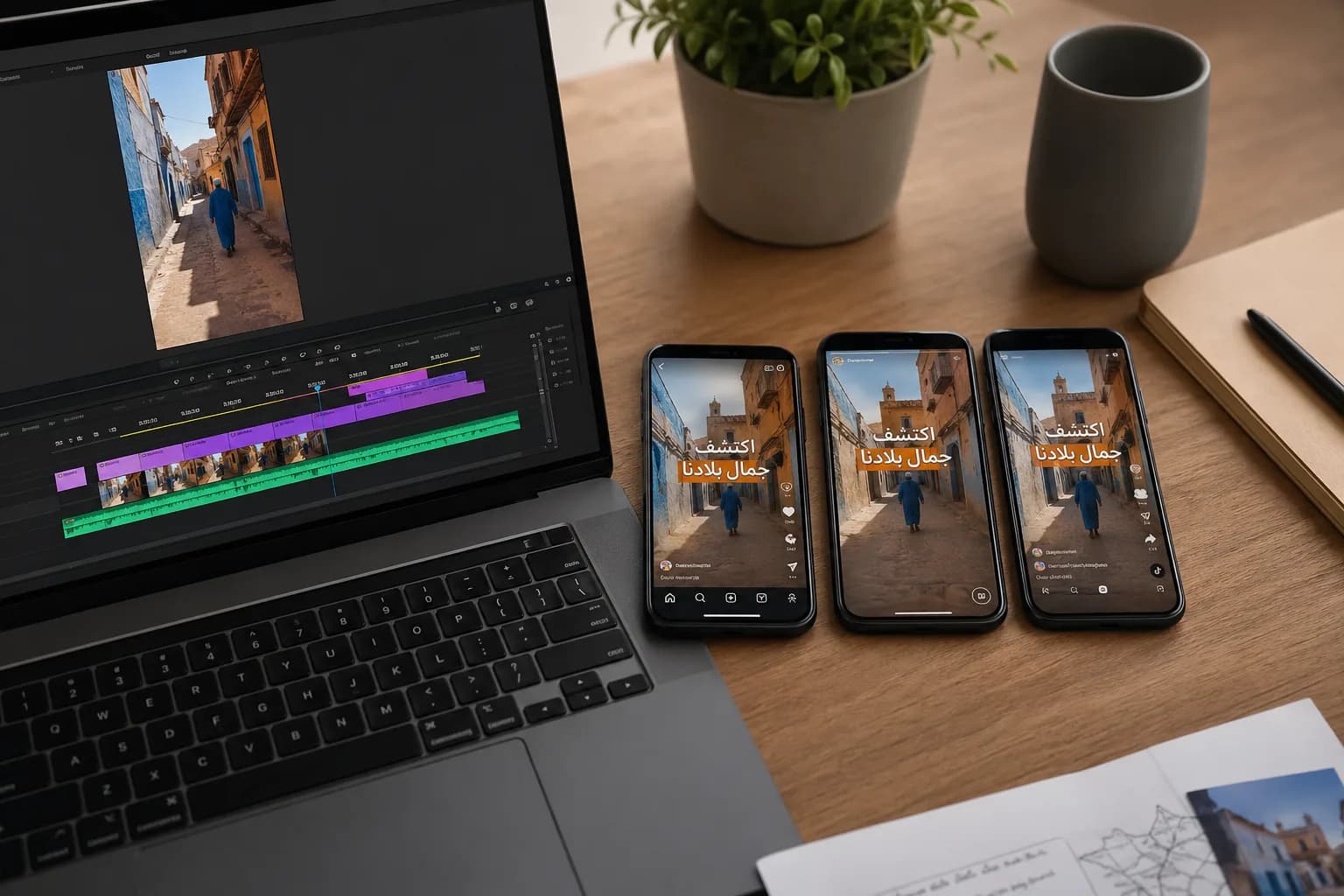
- Review results with the team: what earned attention, what kept people watching, which message was easiest to understand?
- Promote the winning idea into a larger cut: longer video, asset series, multi-platform variants, or a sequenced campaign.
Common mistakes
- Treating the short cut as a trim of a long film. A good short test is designed on purpose—not as an incomplete version of something bigger.
- Changing everything at once. If message, targeting, design, and budget all move together, you cannot read what worked.
- Judging by internal taste alone. Campaigns are measured by what the market understands and responds to.
- Rushing into a large production because the short looked pretty. Visual quality matters, but the primary job here is learning—not only wow.
How Sahil Media can help
Instead of splitting strategy from production, Sahil Media helps Libyan teams turn an idea into a clear short test, read the early signals, then build the larger campaign around the message that already proved itself.
That can include concept development, copy, hook design, fast short-form production, and turning lessons into a broader package—video, content, and paid—so you ship a sharper campaign with less waste.
Conclusion
Big campaigns do not start with the biggest camera or budget. They start with a clear message. A short version is the fastest way to know that message can work before you build everything around it. If you want to test fast, then scale with intent, Sahil Media can help you ship the short cut, read the results, and grow into a full campaign.
Sources & further reading
FAQ
Is a short version only for social campaigns?
No. It is also useful before a hero launch film or even an institutional awareness push, because the goal is to test the message—not only to pick a channel.
What length should the short version be?
There is no single magic number, but it should be short enough to test hook and promise quickly—often between about ten and twenty seconds depending on platform and objective.
Can we rely on a single short cut?
For testing, multiple variants are better so you can compare openings, offers, or angles instead of betting everything on one idea.
When should we move to a bigger production?
When you see a clear signal that the message is understood and worth scaling—through retention, engagement, or inquiry quality.
