

Sahil MediaPublished
Practical guidance from Sahil Media’s editorial team—grounded in Libyan market context and platform documentation.
AI video is tempting for Libyan brands because it saves time, helps small teams ship more, and unlocks visual ideas that once needed bigger budgets. The problem is rarely the tool itself—it is how it is used. When viewers sense the work is overly synthetic, or the brand hides what was generated versus what was actually filmed, trust erodes fast.
The right question is not whether to use AI in video, but how to use it without trading away credibility. In Libya’s market, reputation still moves quickly through relationships, recommendations, and direct feedback—so trust is not a small detail; it is part of the brand itself.
The core rule is simple: treat AI as a way to accelerate and refine, not as cover for reality or invented claims. The clearer the human role, the more local proof, accurate promises, and real faces you show, the more likely viewers read the work as smart and professional rather than misleading or cold.

Why this matters for Libyan companies
Many Libyan brands run lean teams while the market still demands a steady stream of short videos, ads, explainers, and awareness clips. AI can shorten scripting time, support B-roll ideas, and help produce variants—but it does not replace local judgment, cultural nuance, or the brand’s responsibility to its audience.
Libyan audiences notice fast when the message drifts from reality: generic tone, scenes that do not feel local, or visuals that over-promise offices, people, or products. Trust rests on honesty, proximity to real life, and clarity about how content was made.
Platforms, disclosure, and proof
Major platforms increasingly treat generative AI as something that needs context, not silence. Meta has expanded transparency labels for ads created or heavily edited with its generative tools, favoring clearer context over quietly removing material. Brands that build a disclosure habit look more aligned with platform expectations, not less professional.
YouTube’s guidance stresses that disclosure of altered or synthetic content does not automatically cap reach or monetization—what hurts is deception or missing context. TikTok similarly expects clear labeling for realistic AI-generated or heavily edited content and restricts uses that could mislead or impersonate real people.
If a video sells a service, show real people, customers, environments, or the product itself. Where AI generates or enhances shots, they should support the idea—not replace proof. Meta’s public research also shows broad support for warnings when people appear to say things they did not—so avoid fake testimonials, cloned founder voices, or synthetic “crisis” scenes.
Initiatives like C2PA push provenance and edit history. You may not need full implementation tomorrow, but keeping originals, edit logs, and sign-off records now reduces risk as expectations tighten.
Even with disclosure, weak promises, off-brand tone, or generic visuals still fail the trust test. Viewers ask: does this feel like our company? Are scenes and claims believable? Is a human clearly accountable for the message?
Practical steps
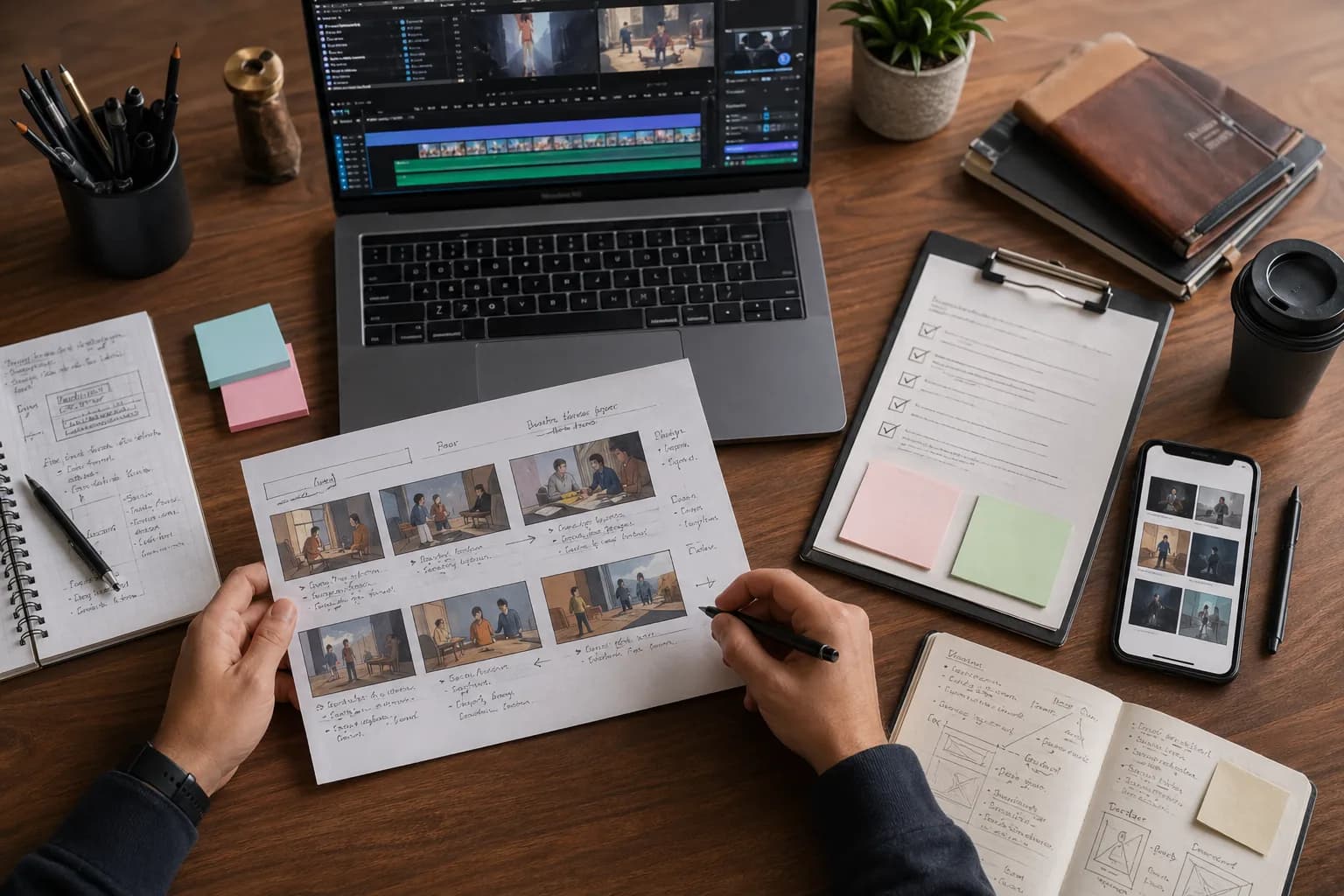
- Start with lower-risk uses: summarizing a concept, early visual angles, or supporting B-roll that does not make hard claims.
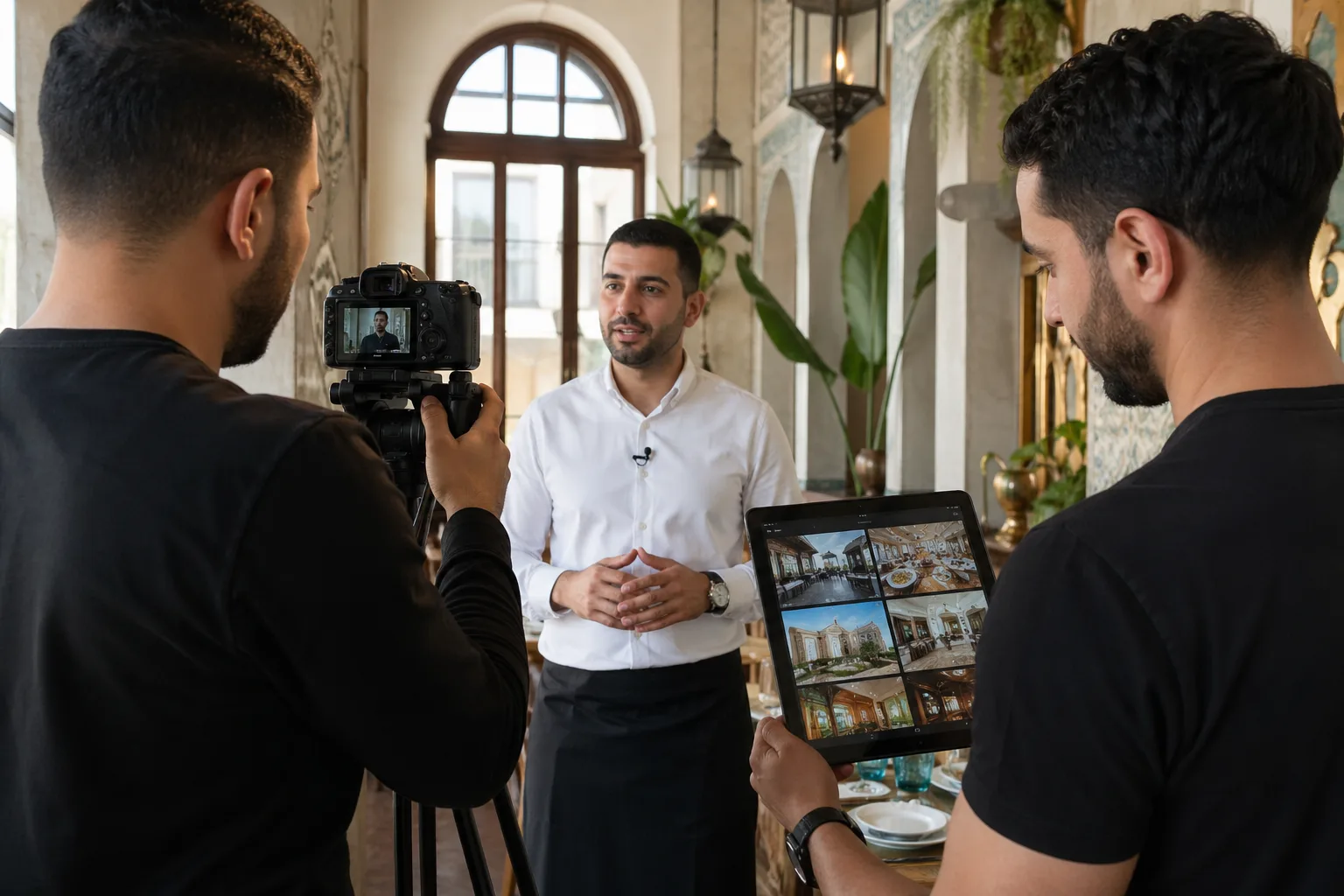
- Keep a real human face on credibility-sensitive work—especially real estate, education, health, and financial services.
- Write an internal policy: when to disclose, when to reject generation, who signs off, and what is never allowed (fake testimonials, voice cloning, etc.).
- Tailor disclosure to each platform and format—caption, description, or in-video context where appropriate.
- Review every important video on three levels: factual accuracy, scene realism, and brand fit.
- Keep a simple production file per major video: script, raw cut, revised cut, and final approval.
Common mistakes
- Using AI “people” when the story needs a trusted face from inside the company.
- Publishing video that looks foreign in faces, accent, and setting, then expecting Libyan viewers to feel spoken to.
- Over-promising visually—results, facilities, or operations that do not match reality.
- Shipping straight from the generator to publish with no legal, editorial, or commercial review.
- Treating disclosure as a threat instead of long-term reputation protection.
How Sahil Media can help
Sahil Media positions AI as part of a disciplined production system—not a substitute for creative judgment or Libyan market context. We help you move from content angle to script, decide what must be shot for real versus what can be visually supported, and keep the message credible end to end.
That matters when you need clear Arabic, a professional tone, and speed across short video, ads, and social. The right mix is rarely “AI only” or “traditional only,” but a hybrid workflow with human direction, editorial control, and outputs tuned for Libya.
Conclusion
AI video is not inherently dangerous to trust—the risk starts when clarity is traded for spectacle, or credibility is compressed into quick effects. When AI speeds thinking, sharpens execution, and supports a true story, it becomes a competitive advantage. If you want a framework that combines strategy, strong Arabic, human oversight, and publishing policies that protect reputation, Sahil Media can help you build a faster, more convincing video system without paying for speed with trust.
Sources & further reading
FAQ
Does every Libyan company have to say it used AI in every video?
Not with the same wording every time—but realistic generated or heavily edited content that needs context should get appropriate disclosure per platform and message. A clear internal policy beats ad-hoc guesswork.
Does disclosure make the video less valuable?
Not necessarily. Platforms are normalizing transparent use when the work is honest. What weakens value is the feeling of deception or a mismatch between promise and reality.
What are the best AI video use cases for Libyan brands?
Behind-the-scenes acceleration: scene suggestions, variants, storyboards, light shot enhancement, or explanatory B-roll that does not make hard claims. Sensitive claims, testimonials, and core promises should stay tied to real capture or verifiable proof.
Does this apply to sensitive sectors like education, health, or real estate?
Yes—with higher caution. The more consequential the viewer’s decision, the more you need real spokespeople, accurate information, and strict pre-publish review.
What makes viewers trust AI-assisted video?
Visible human stewardship, local and understandable language, checkable promises, and no attempt to mimic reality in a misleading way.
